从项目所处的城市区位来看,长沙望城湘江天地这一样板房的底层逻辑,始于对市场客群的敏锐判断——面对以年轻家庭为主力的新兴城区置业者,设计需要在有限面积内回应一种“超预期”的空间体验。116平方米的户型,其核心挑战并非功能缺失,而是如何在中位面积中制造出大平层特有的通透感与心理余裕。这一决策的起点,落在对建筑结构的主动干预上:拆除阳台与客厅之间的隔墙,不仅是界面的消隐,更是一次对原始户型“惯性分区”的否定。结构上的退让,使设备管线与梁位关系被重新整合,从而将阳台从“辅助空间”拉入“核心生活场域”的范畴,为后续的动线组织与视线通廊奠定了物理基础。
The underlying logic of this show flat in Wangcheng, Xiangjiang, Changsha, begins with a sharp understanding of its target demographic—young families in emerging urban districts. For a 116-square-meter unit, the core challenge is not a lack of functions but how to create the sense of spaciousness and psychological ease typically associated with larger layouts within a mid-sized footprint. The design decision starts with an active intervention in the building’s structure: the removal of the partition wall between the balcony and the living room. This is not merely a matter of eliminating a boundary, but a negation of the original floor plan’s “habitual zoning.” By retreating the structural boundary and re-integrating the MEP systems and beam relationships, the balcony is elevated from a service space to an integral part of the primary living area, establishing the physical foundation for the subsequent circulation and visual connectivity.
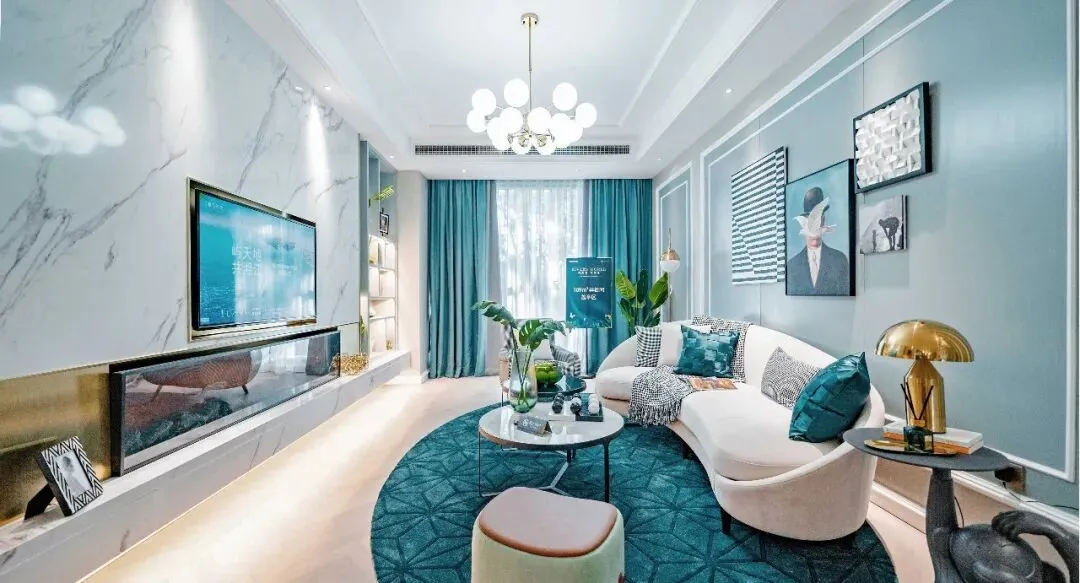
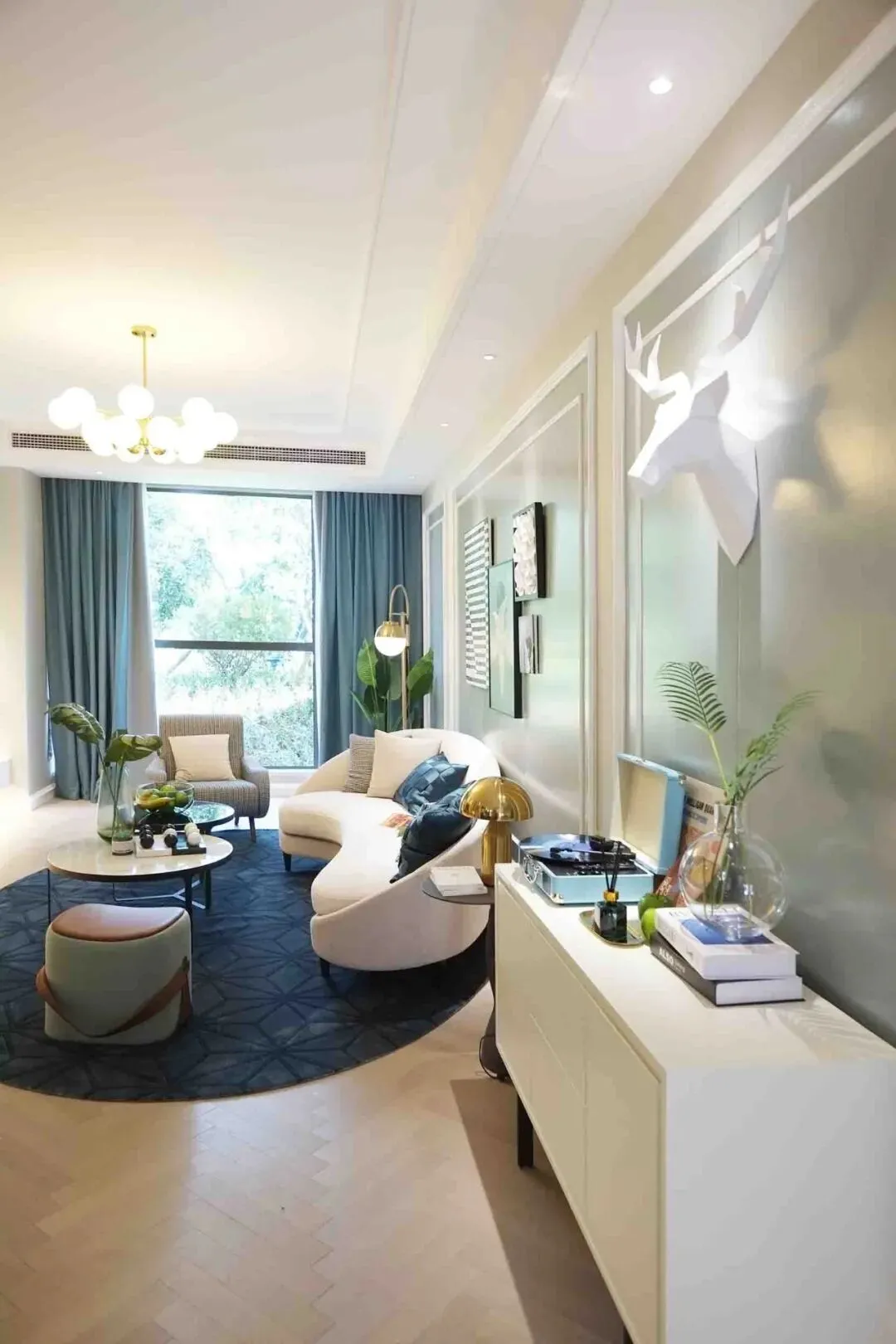
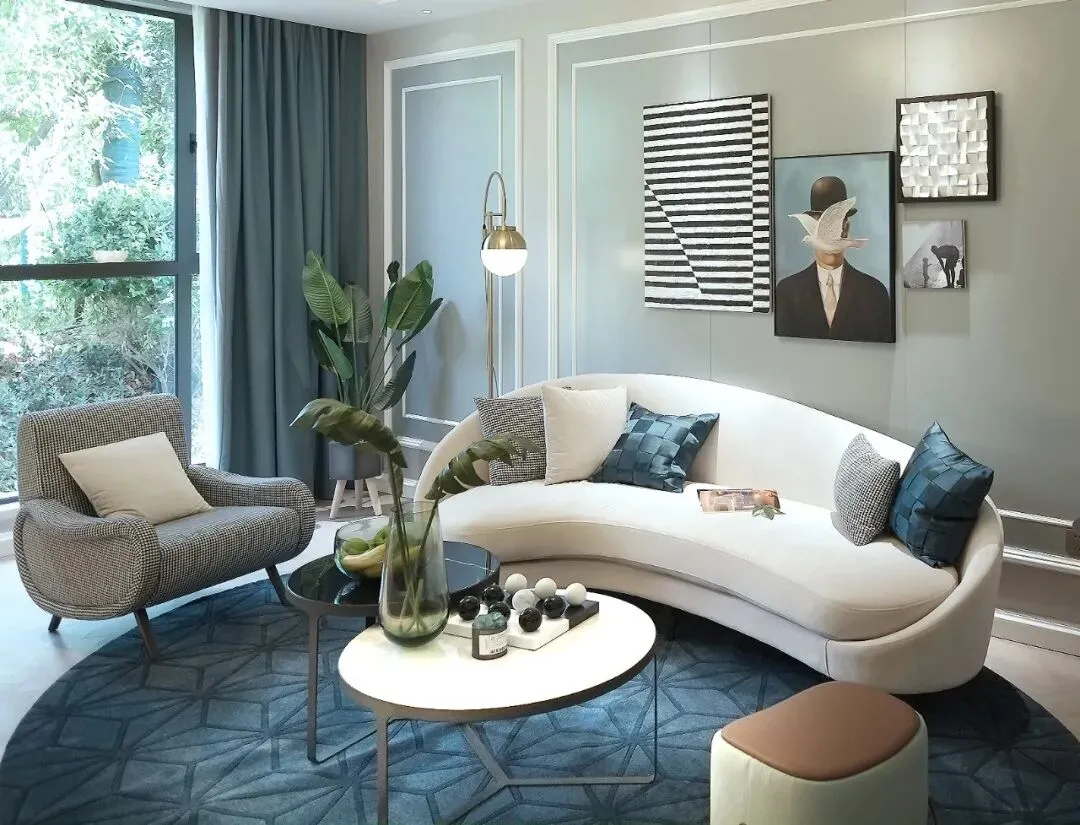
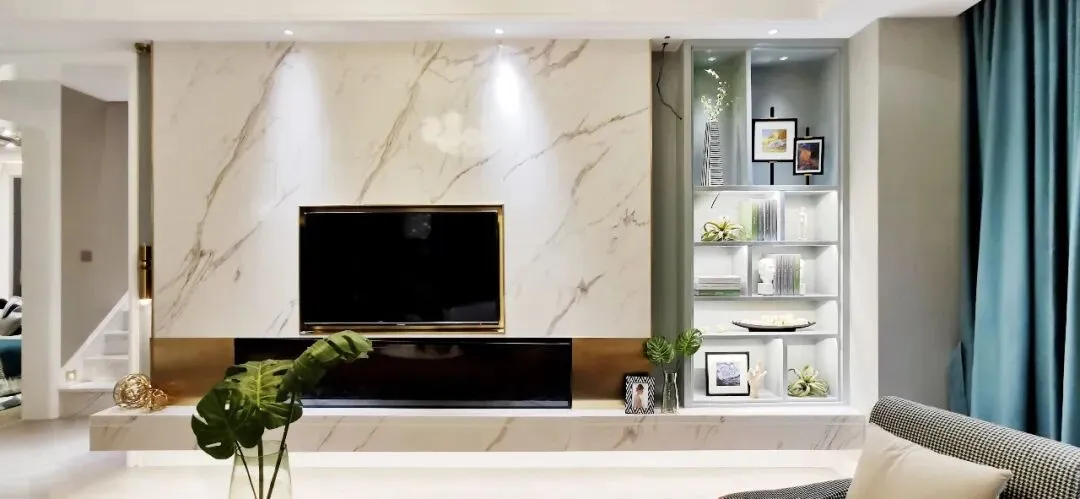
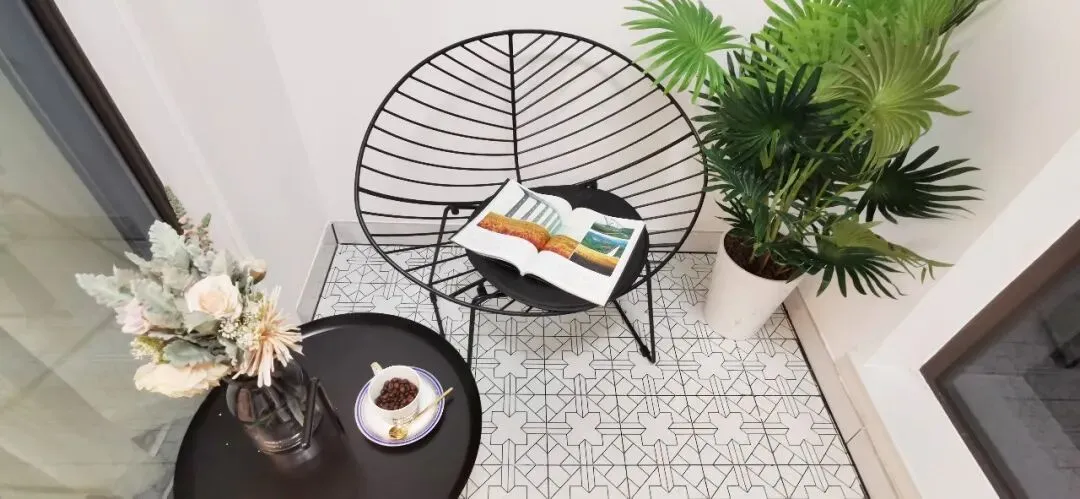
在获得这一连续的横厅基底后,设计的核心转向如何在此“释放出的空间”中建构新的秩序。空间逻辑上,设计采用了“去中心化”的布局策略。面对方正的空间轮廓,设计并未强化其几何正交性,反而以弧形沙发与椭圆形地毯构成一套软性的、非向心性的家具系统。这一选择的本质,是对传统客厅“电视墙-沙发”二元对位关系的解构。沙发不再作为空间的绝对控制点,而是与景观阳台共同构成一个可供多向切换的生活节点。这种比例上的松弛,源自对家庭日常场景的预演:女主人与孩童在阳光与纱幔下的活动,需要的是可分割、可聚合的弹性空间,而非单一视觉焦点的禁锢。弧形元素的介入,在剖面与平面上同时柔化了原始梁柱的直角感,使空间获得一种低张力、高包容度的场所性格。
After establishing this continuous, expansive base, the design shifts to constructing a new order within this “released space.” Spatially, it adopts a decentralized layout strategy. Instead of reinforcing the orthogonal geometry of the square plan, the design introduces a curved sofa and an oval rug to create a non-centric, softly articulated furniture system. This move deconstructs the conventional binary relationship between the TV wall and the sofa. The sofa is no longer the absolute anchor of the room; instead, together with the landscaped balcony, it forms a flexible living node that accommodates multiple orientations and activities. This proportional looseness stems from a careful scripting of everyday family life—the mother’s afternoon tea and the children’s play, both bathed in sunlight filtering through the sheer curtains, require a space that can be either segmented or combined, rather than one dominated by a single focal point. The curved elements soften the orthogonal rigidity of the existing beams and columns, both in section and in plan, endowing the space with a character of low tension and high inclusiveness.
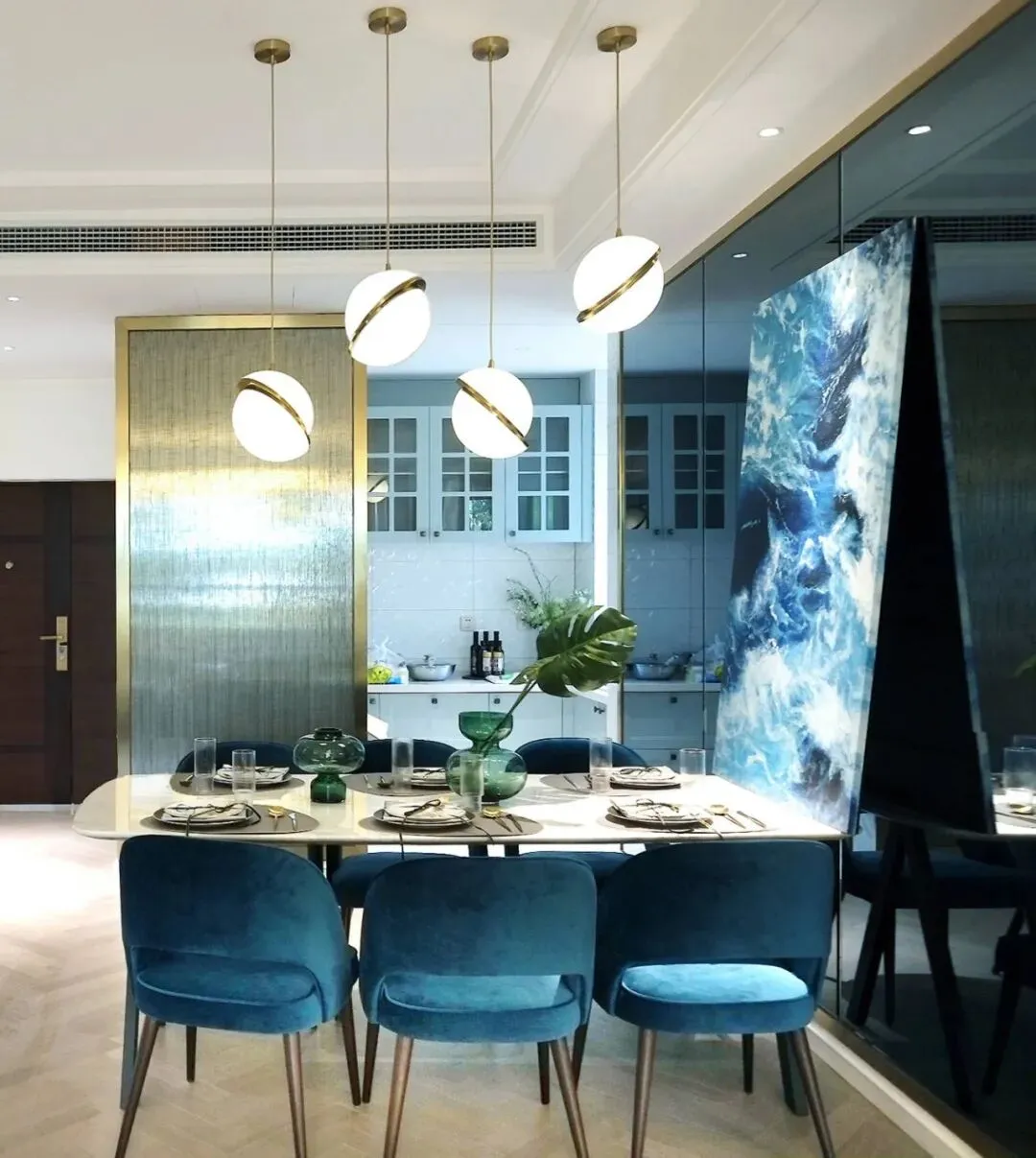
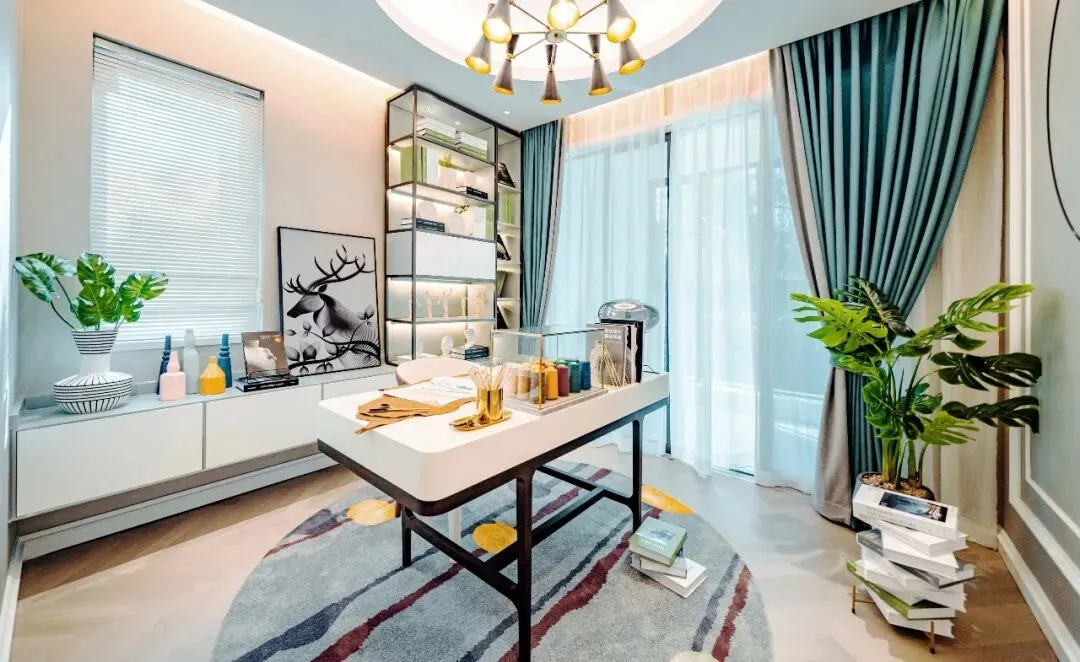
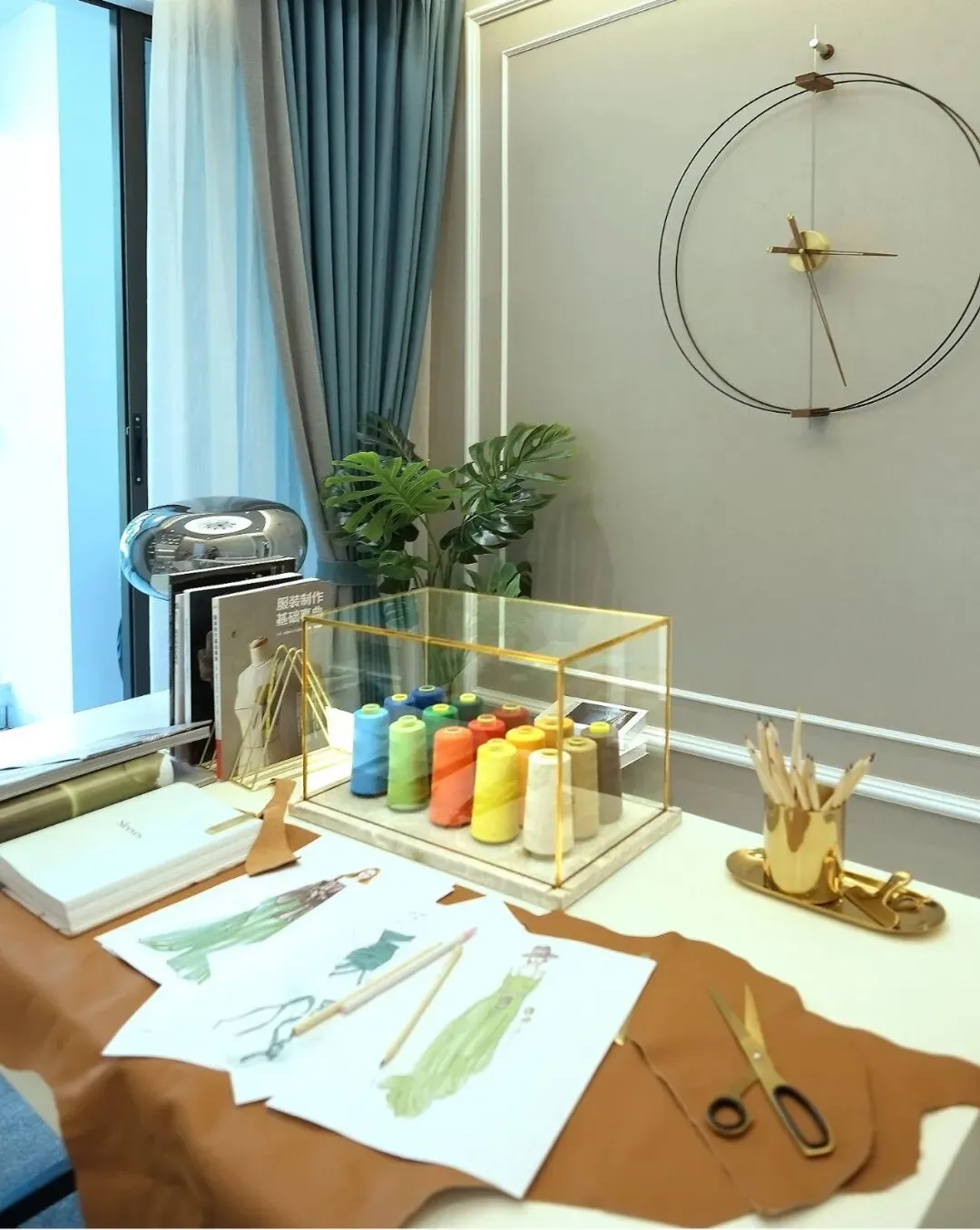
功能组织与动线规划进一步回应了“人”而非“户型”的使用逻辑。餐厅区域的海浪主题艺术画与花艺,看似是装饰点缀,实则承担了空间界面中“软性隔断”的角色——在开放式厨房与客厅之间,它建立起一种视线上的渗透与停留,避免了从烹饪区到起居区直接对视的尴尬。书房的设计则更具策略性:以女主人“服装原创设计师”的身份为锚点,设计并未止步于布置书桌与书架,而是在功能复合中植入了“工作场景与生活场景的并置”。这意味着,空间必须兼容面料样本的陈列、半成品衣物的临时悬挂、以及从创作状态快速切换到家庭陪伴状态的动线冗余。这种取舍反映了设计师对“样板房”本质的重新思考——它并非展示一种静态的装饰风格,而是演绎一种可能的生活方式剧本,让空间的使用者能够在场景中投射自身。
The functional organization and circulation logic further prioritize the user’s behavior over the constraints of the floor plan. In the dining area, the wave-themed artwork and floral arrangement serve not merely as decoration but as a “soft partition” within the spatial interface. Between the open kitchen and the living room, they establish a visual layering and pause, mitigating the direct sightline from the cooking zone to the seating area. The study’s design is more strategic: anchored by the protagonist’s identity as a fashion designer, the design goes beyond providing a desk and shelves. Instead, it introduces a juxtaposition of workspace and living space. This requires the space to accommodate fabric swatch displays, temporary hanging of unfinished garments, and circulation redundancy that allows for a swift transition between creative work and family interaction. This trade-off reflects a rethinking of the show flat’s purpose—not as a static display of decorative styles, but as a performance of a plausible lifestyle narrative, enabling potential occupants to project themselves into the scene.
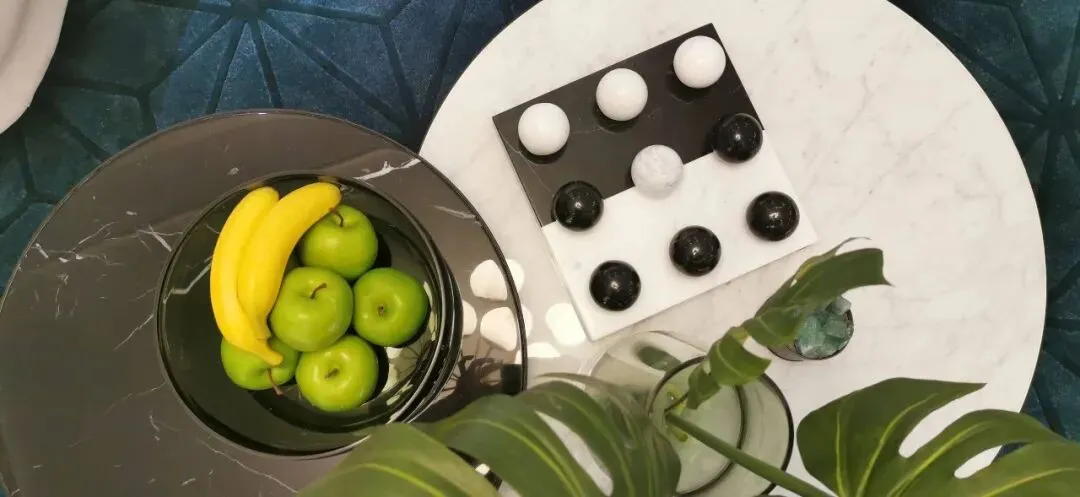
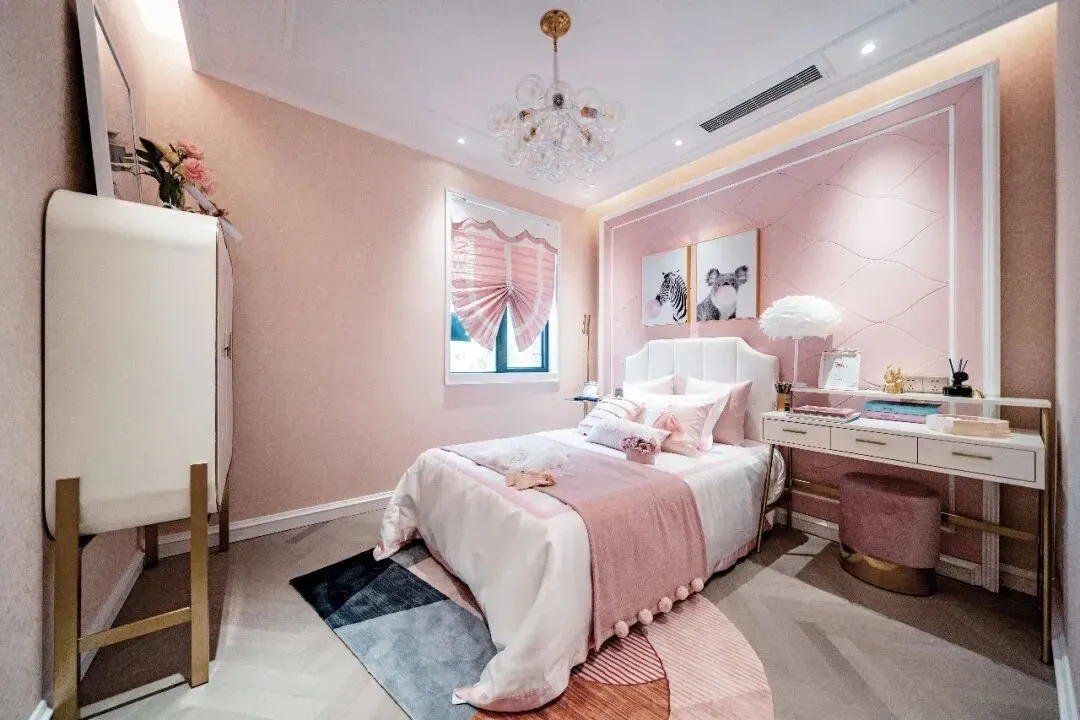
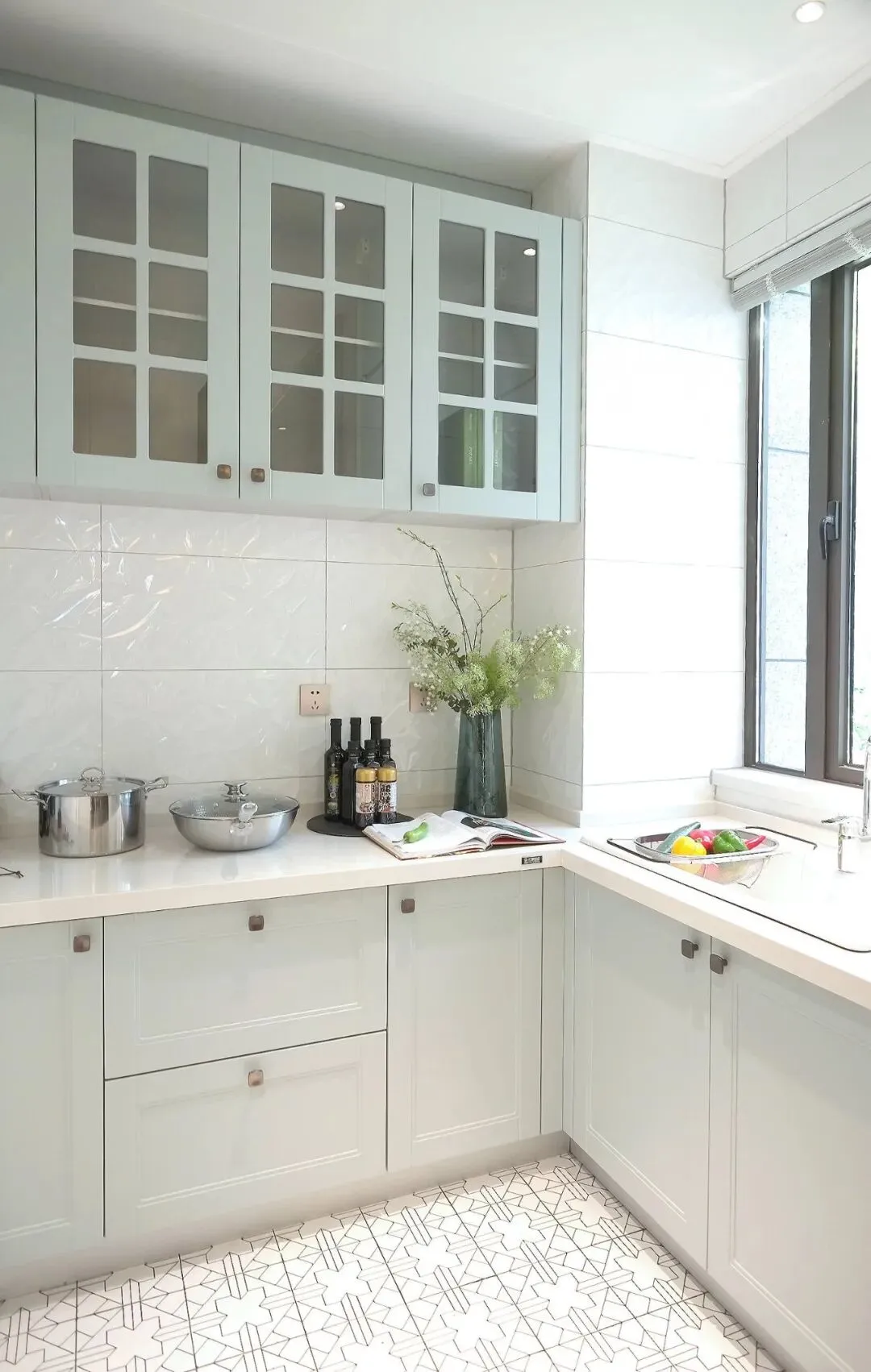
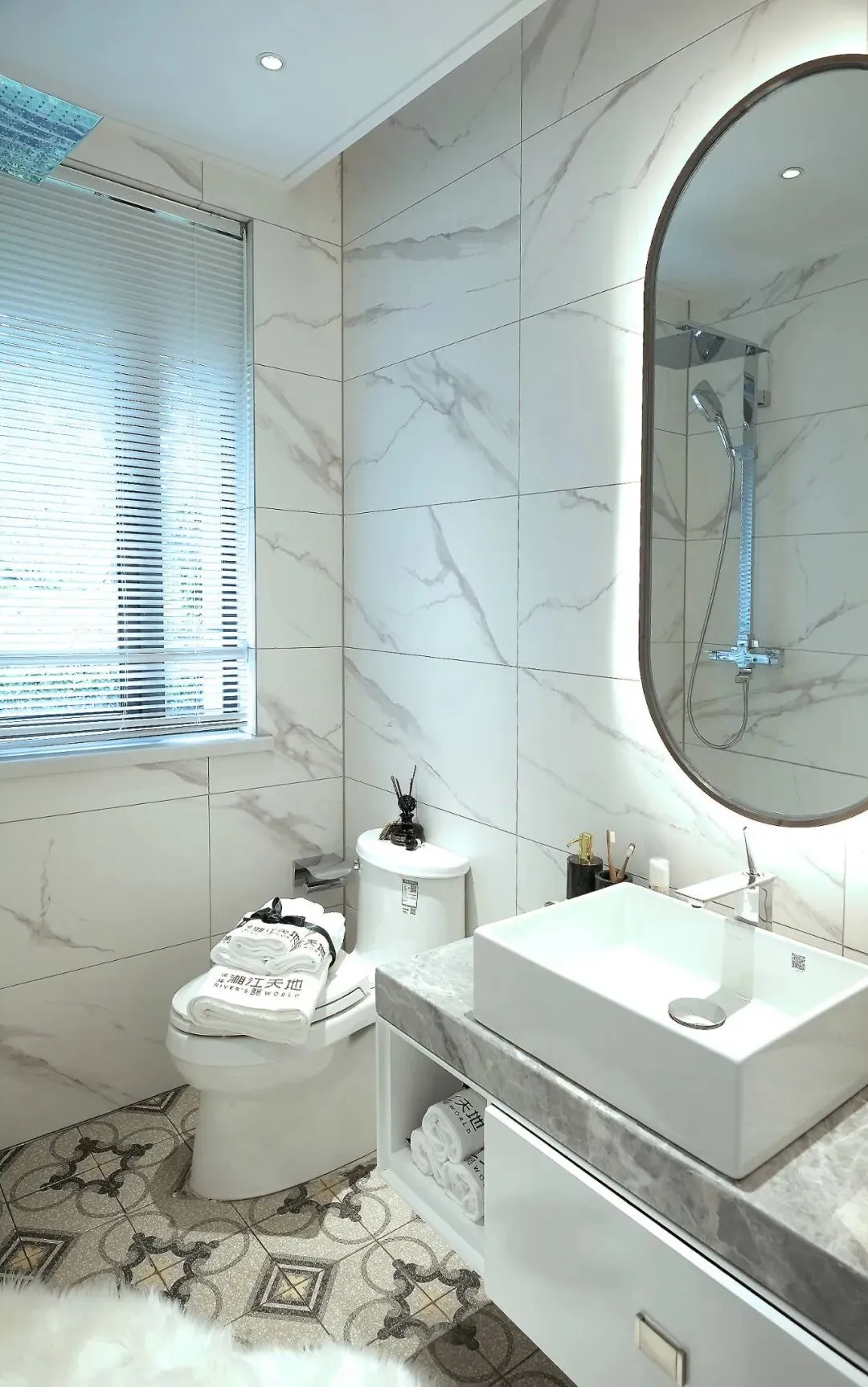
材料与色彩策略在此项目中表现出高度的克制,其本质是对“功能美学”这一命题的回应。白色大理石作为开放式厨房的主铺装,目的并非奢华感的堆砌,而是通过材质的连续性与高反射率,在视觉上消解了橱柜体量对空间的压迫。空间中大面积的浅色调基底,为软装提供了可以“跳脱”的灰阶画布:主卧中优质的软装配饰所呈现的闲适氛围,儿童房里经白色中和后的小公主主题,以及次卧中通过摆件点缀出的活力感,均是在统一底色下进行的局部叙事。这种策略使得空间在整体上保持理性与秩序,又在节点处允许情感与个性的精准投射。灯光系统同样遵循此逻辑——基础照明以间接光为主,营造均匀柔和的环境基调,而重点照明则精准落于花艺、艺术品及功能节点,形成视觉层次,而非单纯照度计算。
The material and color strategy demonstrates a high degree of restraint, fundamentally responding to the proposition of “functional aesthetics.” White marble, used as the primary surface in the open kitchen, is not intended for ostentatious luxury but, through its continuity and high reflectivity, visually mitigates the bulk of the cabinetry. The extensive light-toned base serves as a grayscale canvas for the furnishings: the relaxed elegance of the master bedroom, the purified playfulness of the child’s room, and the curated vibrancy of the secondary bedroom all operate as localized narratives within a unified foundation. This approach maintains rationality and order at the overall level while allowing for precise emotional and personalized expressions at key points. The lighting system adheres to the same logic—ambient lighting is primarily indirect, creating a uniform and gentle atmosphere, while accent lighting is precisely directed at floral arrangements, artworks, and functional nodes to establish visual hierarchy, moving beyond mere illuminance calculations.
回看整个设计过程,最具判断价值的取舍在于:设计师选择了将“空间效率”重新定义为“情感效率”。拆除阳台隔墙、采用弧形家具系统、在书房植入职业场景——这些决策的背后,都是对一种松弛、可切换、具备叙事感的家庭日常的追求。在设备与规范层面,开放厨房的实现必然涉及燃气管线与消防规范的协调,阳台纳入室内则需处理保温层与排水系统的衔接,而设计正是在这些看似限制的约束中,通过界面与构造的精细处理,将技术理性转化为空间体验的延展。最终,这个116平方米的居所所传递的,并非北欧风格的符号堆砌,而是一种可供居住者自由书写的生活脚本——它证明了,空间的品质,不在于尺度的绝对大小,而在于设计能否将限制转化为叙事的起点。
Ultimately, the most significant design decision lies in redefining “spatial efficiency” as “emotional efficiency.” Removing the balcony partition, incorporating the curved furniture system, and embedding professional scenarios into the study are all pursuits of a relaxed, switchable, and narrative-rich domestic life. On the technical front, the open kitchen required coordination between gas lines and fire codes, while integrating the balcony involved resolving insulation and drainage details. The design navigated these constraints through meticulous interface and construction detailing, translating technical rationality into an extension of spatial experience. What this 116-square-meter residence ultimately conveys is not an accumulation of Nordic stylistic tropes, but a life script available for its inhabitants to inhabit and author. It demonstrates that the quality of a space lies not in its sheer size, but in whether design can transform constraints into the starting point of a story.
设计的价值,并非赋予空间风格,而是赋予生活以脚本;真正的功能,是让每一种日常,都能找到恰如其分的舞台。
The value of design lies not in assigning a style to a space, but in scripting a life within it. True functionality is ensuring every ordinary moment finds its rightful stage.


 10个月宝宝每天需要喝多少奶粉?

