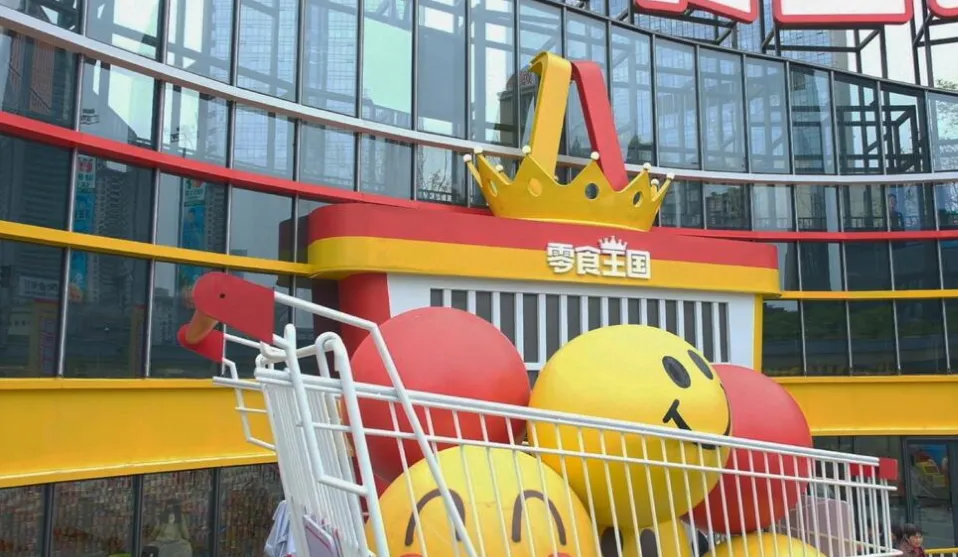
It's a giant, brightly coloured wonderland in China's Changsha, packed with every bag of crisps and tub of sweets imaginable, all in extra, extra large.
这是位于中国长沙的一个色彩鲜艳的巨型“零食乐园”,里面摆满了各种你能想到的薯片和桶装糖果,而且全都是超大、超大号。
Like these giant candy tubes, 35 of them in total.
比如这些巨型糖果筒,一共有35种。
Welcome to the kingdom of snacks, where the sheer size of the product is the main attraction.
欢迎来到这座“零食王国”,在这里,商品巨大的尺寸本身就是最大的卖点。
"I picked this giant lollipop and this massive jar of Oreos."
“我选了这个巨型棒棒糖,还有这大罐的奥利奥。”
Priced between 10 and 20 euros for a giant box, people come here as much for the show as for the shopping.
这些巨型包装的售价在10到20欧元之间,人们来这里不仅是为了购物,也同样是为了观赏和体验。
"They have every flavour of crisps imaginable and the bags are huge. I look tiny standing next to them."
“这里有各种你能想到口味的薯片,而且包装袋都特别大。我站在旁边,看起来特别小。”
Drawing an average of 20,000 visitors per day, this 13,000-square-metre megastore is the largest snack shop in the world.
这家占地1.3万平方米的超大型商店平均每天吸引2万名顾客,是世界上最大的零食店。
But it's a victim of its own success.
但它也因为太成功而陷入了困境。
On May 1, a major national holiday, 50,000 customers emptied the shelves, forcing a temporary shutdown.
在“五一”这一重要法定节假日当天,5万名顾客几乎把货架一扫而空,迫使商店暂时停业。
Now, keeping the shelves stocked has become a daily battle.
如今,保持货架货源充足已经成了一场每天都要面对的“战斗”。
The average person in China consumes about 17 kilos of snacks per year, half as much as in the United States, but consumption is on the rise.
中国人均每年消费约17公斤零食,这一数字约为美国人均消费量的一半,但零食消费仍在持续增长。